


 October 27, 2026
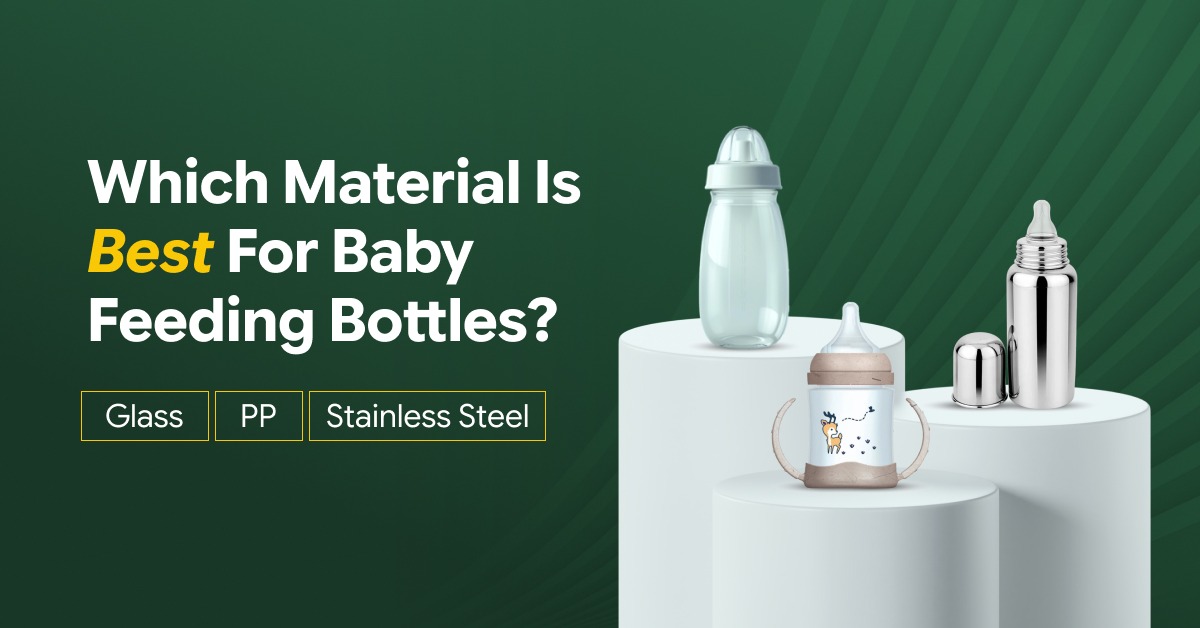
Which Material Is Best for Baby Feeding Bottles? Glass, PP or Stainless Steel
Choosing quality, sustainable feeding bottles helps protect babies and supports responsible consumption. Parents need safe materials that withstand daily feeding, cleaning and sterilisation. However, each material offers different benefits, durability and convenience for busy families. This blog explores which material feeding bottle is best for baby, comparing glass, PP and stainless steel.
Which Material Feeding Bottle Is Best for Baby?
-
- Safety: Choose food-grade baby bottle materials designed for infant feeding and regular cleaning.
- Durability: Consider how well the bottle withstands daily handling and accidental drops.
- Weight: Select a manageable bottle that parents can comfortably carry and handle.
- Cleaning: Look for smooth surfaces and designs that allow thorough washing.
- Heat resistance: Check whether the bottle supports the manufacturer’s recommended sterilisation method.
- Sustainability: Consider product lifespan, recyclability and responsible material sourcing.
1. Glass Baby Bottles
Glass bottles offer a non-porous surface that resists odours and stains. They do not absorb milk residues easily when cleaned correctly. Moreover, glass can withstand repeated use and appropriate sterilisation.
2. PP Baby Bottles
Polypropylene, commonly called PP, is a lightweight plastic used in feeding bottles. Quality food-contact-grade PP offers practical handling for everyday feeding. Additionally, it resists shattering and suits families who travel frequently.
3. Stainless Steel Baby Bottles
Stainless steel baby bottles provide a durable alternative to glass and plastic. They resist breaking and can withstand everyday handling. Furthermore, stainless steel offers a long service life when properly maintained.
Distinction: Glass vs PP vs Stainless Steel Baby Bottles
Understanding glass vs PP baby bottles vs stainless steel, helps parents choose products that suit their routines. The baby bottle materials offer different advantages in weight, durability, maintenance and long-term use.
Glass bottles: Glass offers a smooth, non-porous surface and excellent stain resistance. Glass supports repeated use when handled carefully. However, its weight and breakage risk require extra attention. Protective sleeves may help, although they cannot guarantee protection against every impact.
PP bottles: PP bottles suit parents who prioritise lightweight handling and portability. Quality PP bottles can offer practical, affordable feeding solutions. However, plastic may develop scratches or signs of wear. Parents should inspect bottles regularly and follow cleaning instructions carefully.
FAQ. Can PP baby bottles be sterilised regularly?
Many PP bottles support recommended sterilisation methods, but temperature limits vary by product. Always follow the manufacturer’s instructions. Inspect which material feeding bottle is best for baby for scratches, warping or other damage. Replace any bottle that shows deterioration or no longer cleans properly.
Stainless steel bottles: Stainless steel offers strength and resistance to accidental breakage. These bottles can support long-term use when made from suitable food-contact-grade materials. However, they often cost more initially than plastic alternatives. Their opaque construction can also make milk measurement less convenient.
FAQ. Are glass bottles safer than plastic bottles?
Both can be suitable when manufactured from appropriate materials and used correctly. Glass avoids plastic contact with milk, while quality food-grade PP offers lightweight convenience. Always check which material feeding bottle is best for baby, by going through product specifications, cleaning guidance and safety compliance before purchasing.
At Kasem International, which material feeding bottle is best for baby depends on the quality material selection which remains central to baby feeding bottle manufacturing. The company focuses on producing feeding solutions that meet practical requirements.
FAQ. Are stainless steel bottles environmentally friendly?
Stainless steel can offer a long service life and is recyclable in many places. However, environmental impact depends on manufacturing, transport reuse and recycling access.
Conclusion
Choosing which material feeding bottle is best for baby depends on safety, convenience, durability and family preferences. Glass suits parents seeking transparency, PP offers lightweight practicality and stainless steel provides lasting strength. Explore Kasem International’s baby feeding bottle solutions and choose quality that supports everyday feeding needs for your baby.
Recent Posts
- Which Material Is Best for Baby Feeding Bottles? Glass, PP or Stainless Steel
- How Baby Care Products Are Made: Choosing a Manufacturer in Thailand
- What to Know Before Choosing Feeding Bottle & Nipple Manufacturers in Thailand
- Importance of Maintaining Quality Baby Products: A Manufacturer’s Perspective on Safety Standards