

 November 23, 2026
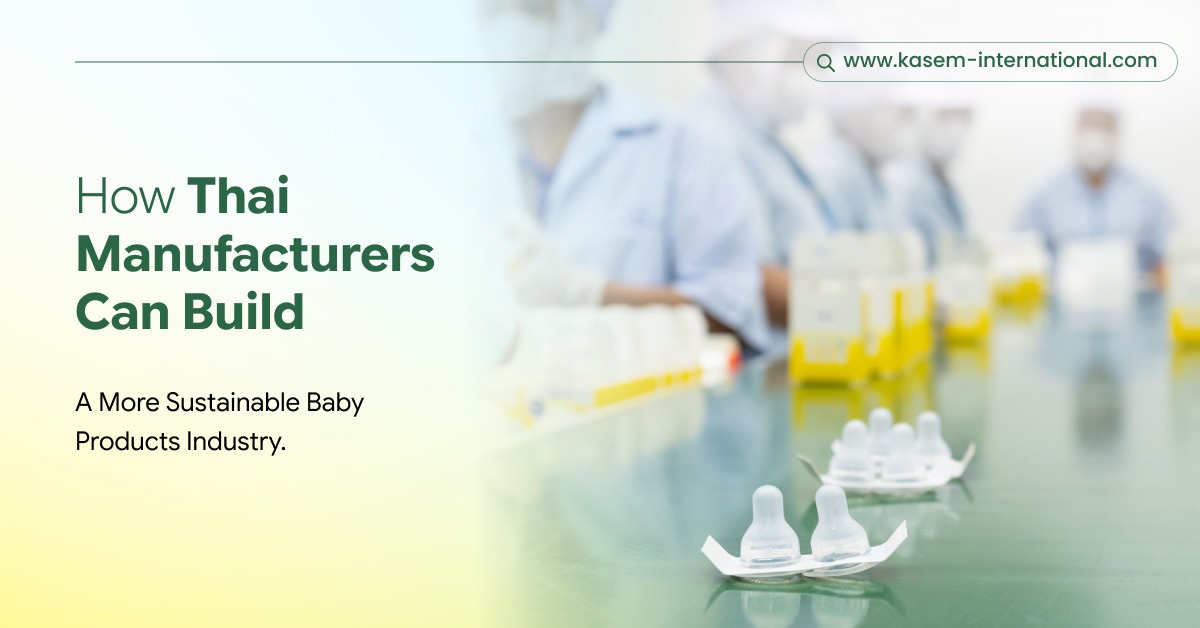
How Thai Manufacturers Can Build a More Sustainable Baby Products Industry
Parents today want safer products for their babies. Yet traditional production creates heavy waste and high emissions. Therefore, greener design and lower factory waste matter more than ever. This blog shows how sustainable solutions in Thailand reduce waste. They also deliver eco friendly sustainable products and lessen our carbon footprint.
Why Do Sustainable Solutions in Thailand Matter?
- Thailand generates large volumes of plastic and industrial waste every year.
- Landfills near major cities are filling up quickly.
- Factories consume heavy energy, which raises carbon emissions.
- Parents increasingly check labels for safe, non-toxic materials.
- Rising temperatures threaten farms, water and local communities.
- Strong sustainable solutions in Thailand help manufacturers stay competitive in export markets.
What Are the Sustainable Solutions in Thailand That Shape the Baby Products Industry?
1. Renewable Materials
Thai manufacturers now invest in sustainable product development. First, they replace virgin plastic with bamboo fibre and bio-based resins. Next, designers create durable items that last through several babies. Moreover, lighter designs use fewer raw materials. As a result, each product leaves a smaller footprint.
2. Recycled Packaging
Packaging creates much of the baby care industry’s waste. Therefore, factories switch to recycled cardboard and soy-based inks. Additionally, they remove unnecessary plastic wraps and layers. This approach drives real waste reduction in manufacturing. Consequently, landfills receive far less packaging every year.
3. Energy-Efficient Factories
Clean energy powers a greener factory floor. Many plants install rooftop solar panels across Thailand. Furthermore, smart meters track and cut electricity use. These sustainable solutions in Thailand lower emissions and operating costs together. Meanwhile, workers enjoy cooler, healthier workplaces.
FAQ. What makes a baby product eco-friendly?
An eco-friendly baby product uses safe, renewable or recycled materials. It avoids harmful chemicals and excess plastic. Manufacturers also reduce energy, water and waste during production. It also lasts longer or biodegrades safely. Overall, it protects babies and the planet.
4. Kasem International Leads the Way
Kasem International leads this change as a pioneer. This leading manufacturer built its brand on sustainable baby care products. Its eco friendly baby product production uses safe materials and clean processes. Likewise, the company supports the sustainable circular economy through reuse and recycling. Thus, Kasem International sets a strong example for peers.
5. Water Recycling and Zero-Waste Lines
Production once wasted huge amounts of water and offcuts. Now, factories treat and reuse processed water on site. In addition, they regrind scrap into new materials. Such waste reduction in manufacturing protects rivers and saves money. Hence, zero-waste targets feel achievable.
6. Safe, Non-Toxic Formulations
Babies need gentle, safe materials. Therefore, sustainable product development now includes BPA-free and phthalate-free choices. Chemists test every raw material before approval. Likewise, brands choose plant-based, biodegradable ingredients for wipes and diapers. Parents gain peace of mind with every purchase.
7. Circular Economy and Take-Back
Circular thinking keeps materials in use longer. For example, brands run take-back programs for used bottles and toys. Then, recyclers turn them into new products. This model strengthens eco-friendly baby product production across the sector.
FAQ. How can I identify a trustworthy sustainable brand?
Check for recognized safety and certifications first. Then read the ingredient and material labels carefully. Look for brands that share recycling and take-back programs openly. Trusted names like Kasem International publish clear sustainability goals.
FAQ. Are sustainable baby products more expensive?
Some cost slightly more upfront. However, durable materials last longer and save money over time. Many parents also reuse items for siblings. Thus, sustainable choices prove affordable in the long run.
Conclusion
Thailand’s baby products industry is changing fast. Clever design, clean energy and circular thinking drive this shift. Indeed, sustainable solutions in Thailand protect babies and the planet together. Choose greener brands like Kasem International today. Contact Kasem International now and start your sustainable journey.
Recent Posts
- How Thai Manufacturers Can Build a More Sustainable Baby Products Industry
- Eco Friendly Baby Products in Thailand: Materials, Benefits and Manufacturing
- How Baby Accessories Manufacturers in Thailand Support Growing Baby Care Brands
- Which Material Is Best for Baby Feeding Bottles? Glass, PP or Stainless Steel